If you’ve ever stopped to think about how video calls stay crystal clear across oceans, or how your favorite streaming service delivers shows in 4K without buffering, you’re standing on the shoulders of technologies that most people take for granted. As someone who’s spent 12 years as a fiber coupled laser modules supplier—walking factory floors, troubleshooting late-night customer orders, and sitting through endless demos with telecom engineers—I get the questions people ask most: “Is this really the backbone of modern communication?” Today, we’re cutting through the hype and the jargon to answer the big one: Can fiber coupled laser modules actually be used in communication systems? Fiber Coupled Laser Modules
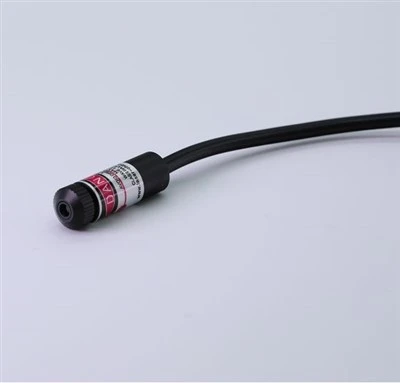
Let’s start with the basics, because this isn’t about some flashy new tech. Fiber coupled laser modules are exactly what they sound like: lasers paired with precision-aligned optical fibers that gather and channel their light into a tight, consistent beam. For communication, that beam isn’t just light—it’s data. Every text, image, and voice signal gets translated into binary code (1s and 0s) and then modulated onto the laser’s wavelength. That modulated light travels through fiber optic cables for thousands of miles, bouncing off tiny mirrors inside the fiber until it reaches its destination, where it’s converted back into data.
Now, you might be wondering why this matters more than older communication tech, like copper wires. The short answer is performance, but the long one is where the real story is. Copper relies on electrical signals, which degrade over distance—think of how a landline call gets staticky when you’re far from the exchange. Laser light in fiber doesn’t do that. At our facility, we test fiber coupled laser modules to travel up to 100 km (62 miles) without needing a signal booster, and with data rates that top out at 1.6 terabits per second (Tbps)—that’s enough to send 200,000 HD movies in a single second. No other technology comes close to that efficiency.
But let’s get real. Communication systems aren’t just about distance and speed—they need to be reliable, too. When I first got into this business 12 years ago, most telecom engineers wrote off fiber coupled lasers as too finicky for real-world use. Back then, early modules had weak beams that lost power over time, and the alignment between the laser and fiber slipped if a cable was jostled. We didn’t just sit around and listen to the complaints, though. Our team spent three years perfecting our module design: we switched to indium phosphide laser diodes, which are far more stable than the old gallium arsenide models, and used automated alignment robots that position the fiber within a micron (that’s 1/50th the width of a human hair) of the laser’s active core. The result? Our modules have a mean time between failures (MTBF) of over 100,000 hours—more than 11 years of continuous operation. That’s a number that makes telecom teams sleep easy at night, because when a fiber line goes down, it’s not just an inconvenience—it can cost millions in lost revenue for banks, healthcare providers, and e-commerce platforms.
One of the biggest misconceptions I hear is that fiber coupled laser modules are only for long-haul lines, the giant cables that cross the Atlantic or link cities thousands of miles apart. That’s part of the story, but not the whole thing. Today, communication systems use these modules everywhere, from the smallest 5G cell tower to the data centers that power Google, Meta, and Amazon. Let’s break that down. For data centers, which are the nervous system of the internet, fiber coupled lasers connect server racks across the room and across the globe. When you save a photo to the cloud, it travels from your phone to a data center via a laser module, bounces between servers using more laser modules, and then sends back a notification. In 5G networks, cell towers use these modules to send data between the tower and the core network, and even to connect the small, low-power cells that fill in gaps in urban areas. Without fiber coupled laser modules, 5G wouldn’t be able to handle the 100x more devices that connect to it today, compared to 4G.
But here’s where the rubber meets the road: what makes a fiber coupled laser module good enough for communication? It’s not just the speed. Wavelength stability is non-negotiable. If a laser’s wavelength drifts even a tiny amount (like 1 nanometer), it can interfere with other signals on the same fiber, causing data errors. Our modules use temperature-controlled thermoelectric coolers that keep the laser’s core within 0.5 degrees Celsius of its target temperature, so the wavelength stays locked for years. That’s why we supply modules to satellite communication companies, too—satellites need to transmit data to Earth with zero signal loss, even when temperatures swing hundreds of degrees in space.
Power efficiency is another key factor. Communication networks have millions of lasers running 24/7, so a module that wastes a lot of energy adds up to huge electricity bills over time. Our fiber coupled laser modules have a wall-plug efficiency of over 50%—meaning half of the electricity they use turns into usable light, not heat. Compare that to older copper-based systems, which are less than 10% efficient, and you start to see why network operators are making the switch. A single data center using 10,000 of our modules saves enough energy each year to power 200 average U.S. homes.
Of course, no technology is perfect, and fiber coupled laser modules have faced challenges. A few years ago, some companies tried to use free-space optics (lasers that don’t go through fiber) for short-haul communication, thinking it would be cheaper. But free-space optics are susceptible to weather—rain, fog, even snow can scatter the light, causing outages. Fiber coupled lasers are sealed inside protective casings, so they work rain or shine, no matter the environment. I’ve seen this first-hand with a customer in a remote area of Canada that needed a communication link for a mining operation. They tried a microwave link first, which kept going down during the harsh winter storms, then switched to our fiber coupled laser modules. Three years later, they haven’t had a single signal outage due to weather.
Another challenge is cost. Early fiber coupled laser modules were expensive, which made small businesses hesitant to adopt them. But over the last decade, advancements in manufacturing have driven costs down by more than 70%. Today, a fiber coupled laser module for a small business’ network costs about the same as a high-end copper transceiver, with way better performance. That’s why we’ve seen a surge in demand from small and medium-sized enterprises that need reliable, high-speed communication for their offices and warehouses.
Now, let’s talk about the future, because communication systems aren’t standing still. 6G is already in development, with researchers targeting data rates of up to 1 terabyte per second—100x faster than 5G. Fiber coupled laser modules will be the core technology here, because they’re the only ones that can handle that kind of speed over long distances. We’re already testing prototype modules that can operate at 2 Tbps, using new wavelength division multiplexing (WDM) technology that sends multiple signals over different wavelengths of the same fiber. That means a single fiber can carry 100x more data than it does today, without digging up roads to lay new cables.
But here’s the thing: technology only matters if it works for the people using it. That’s why we don’t just sell fiber coupled laser modules—we work with our customers to design custom solutions for their specific needs. A hospital might need a module that can withstand the vibration of an MRI room, while a defense contractor might need one that’s rugged enough for military vehicles. Last year, we partnered with a university’s communications lab to develop a module for a quantum communication testbed, which uses entangled photons to send unhackable data. Fiber coupled lasers are the only way to get those photons to the detector without losing their quantum state.
I’ll be honest, when I started in this industry, I never thought fiber coupled laser modules would be as integral to communication as they are today. I’ve seen them evolve from clunky, unreliable prototypes to compact, efficient devices that power every part of the digital world. But let’s get back to the original question: Can fiber coupled laser modules be used in communication systems? The answer isn’t a yes or a no—it’s a resounding yes, and they’ve been the backbone of modern communication for over 30 years. From undersea cables that circle the globe to the cell tower in your neighborhood, these modules are what keep our connected world running.
If you’re a network operator, a system integrator, or someone looking to upgrade your communication infrastructure, we can help. We’ve been in this long enough to know that every project has unique requirements, and we don’t push a one-size-fits-all solution. Whether you need a standard module for a data center or a custom-designed one for a specialized application, our team has the expertise to deliver. Let’s talk through your needs—together, we can find the right fiber coupled laser module solution for your communication system.
Multi-Beam Laser Modules References
Agrawal, G. P. (2020). Fiber-Optic Communication Systems. John Wiley & Sons.
ITU-T G.694.1 (2016). Spectral grids for WDM applications: DWDM frequency grid. International Telecommunication Union.
Kartner, F. X. (2018). Laser Technology for Optical Communication. Nature Photonics.
Mecozzi, P., & Essiambre, R.-J. (2019). High-speed fiber-optic communication: Recent advances and future challenges. Proceedings of the IEEE.
Changshu Desheng Optics Electronics Co., Ltd.
As one of the most professional fiber coupled laser modules manufacturers and suppliers in China, our products have good reputation in the market. Please feel free to buy advanced fiber coupled laser modules for sale here from our factory. Good service and quality products are available.
Address: 8A, Yineng science and technology industrial park, No.183, Yinhe Road, Southeast Development Zone, Changshu, Jiangsu Province, China.
E-mail: desheng1@dershinelaser.com
WebSite: https://www.ds-lasers.com/
