Can foldable labels be used on fabric? It’s a question I field at least a dozen times a week as someone who’s spent the last eight years designing and supplying foldable labels for all kinds of industries—from outdoor apparel brands to luxury bedding manufacturers. And the short answer? Yes, but it’s not just a matter of “sticking something to cloth.” It’s a combination of material science, manufacturing precision, and understanding how fabric behaves through washing, stretching, and daily wear. Let me break this down, not as a textbook answer, but as someone who’s tested these labels on hundreds of fabric rolls, worked with sewers who complained about mislabeled batches, and solved for issues that almost no one else in our industry even considers. Foldable Label

First, let’s address the most common misconception: foldable labels are not just paper or plastic tags folded in half. When we design a label for fabric application, the fold itself is engineered to eliminate two problems that plague standard woven or iron-on labels: first, the scratchy edge that rubs against a wearer’s neck or skin, and second, the label peeling off after the third wash. For fabric, the label’s base material is non-negotiable. Most people assume we use fabric—wait no, not exactly. For direct attachment to textile, we use a laminated polyester film with a proprietary heat-activated adhesive that’s formulated specifically for the porosity of different fabrics. Cotton, for example, has a tighter weave than linen, so the adhesive needs to flex to sink into the gaps between threads without lifting. For stretch fabrics like spandex blend activewear, the label’s base material has a 150% elongation rate, meaning it will stretch with the fabric as a person moves, instead of snapping at the fold line or pulling away mid-run.
I’ll be honest, when I started this business in 2015, we tried making foldable labels out of woven cotton for a small children’s clothing brand. We thought cotton would be softer, more eco-friendly. But within six months, the brand’s customers were sending photos of labels fraying at the fold after a dozen washes. The problem? Woven cotton has loose fibers, so every time the fabric stretches or gets washed, the fibers at the fold pull away. That’s when we shifted to the laminated polyester with a micro-textured surface on the back. The texture grabs onto fabric threads at a molecular level, and the fold—we do a 180-degree fold with a heat seal that runs 0.5mm along the edge—creates a smooth, rounded border that never catches on clothing closures or irritates skin. It’s the small detail that makes all the difference for fabric use.
Next, let’s talk about application methods. You can’t just iron a foldable label onto fabric and call it a day. For most apparel brands, we recommend two methods, each tailored to the fabric type. For woven fabrics (cotton, polyester, denim), the adhesive-backed foldable label works with a professional heat press set to 150°C (300°F) for 12 seconds. That’s not too hot—hot enough to activate the adhesive, not so hot that it shrinks the fabric or melts the label’s front print. For stretch fabrics like yoga pants or athletic jerseys, a lower temperature (135°C / 275°F) and a longer press time (18 seconds) is better. The slower heat gives the adhesive time to flex into the fabric’s stretch fibers without causing the fabric to pucker. We’ve tested this on 20 different stretch fabrics over the years, and the peel test (pulling the label off with 10 Newtons of force) shows a 98% adhesion rate after 50 wash cycles—way better than standard iron-on labels, which often fail around the 10-wash mark.
But what about specialty fabrics? Let’s take performance outdoor gear, like Gore-Tex jackets, which are coated with a water-repellent membrane. Standard labels can leave a gap where water seeps in, ruining the membrane. Our foldable labels have a waterproof coating on the front that doesn’t affect the fabric’s water resistance—we tested this by adhering labels to Gore-Tex samples, washing them 30 times, and measuring water pressure; the result was identical to unlabeled fabric. That’s a big win for outdoor brands, who’ve been struggling with this exact problem for years. We also make labels for ultra-soft fabrics like modal bedding and bamboo loungewear. For those, we add a micro-soft laminate to the label’s front, so it feels like part of the fabric, not a separate tag. Customers barely notice it, which is exactly what brands want for loungewear—no scratchy tags, no annoying pulling at night.
Now, let’s get real about the challenges. Foldable labels aren’t one-size-fits-all, and we’ve had to solve for every edge case you can think of. A few years back, a client who made leather goods wanted foldable labels for the inside of leather jackets. Leather is a tricky material—it doesn’t absorb adhesive the same way fabric does. We developed a heavy-duty acrylic adhesive for that, which bonds to leather without cracking when the jacket bends at the elbows. Another client worked with fire-resistant fabric for industrial workwear. Their labels needed to be flame-resistant too, so we partnered with a material science lab to test our label’s fabric (polyester, which is inherently flame-resistant) and ensure it met NFPA 701 standards. No other foldable label supplier offers that custom testing, which is why brands keep coming back.
I know some people will push back: “Why not just sew on a woven label?” Let’s compare. Woven labels have to be sewn into the seam, which adds labor time—apparel factories pay $0.03 to $0.05 per label to sew, whereas our foldable labels take 12 seconds of heat press time, which cuts that cost in half. For a brand making 100,000 units a year, that’s $2,000 to $5,000 in annual savings. Also, woven labels are limited to small text sizes—you can’t cram a long care instruction into a woven label without it looking cramped. Our foldable labels can print up to 4 lines of small text, perfect for care instructions, brand logos, or even a small QR code for product details. And for children’s clothing, which has strict safety rules (no loose threads that pose a choking hazard), the foldable label’s sealed edge eliminates that risk entirely—no fraying, no loose threads, unlike woven labels that need to be cut and can leave raw edges.
Wait, let’s talk about sustainability too, because that’s a big topic now. A lot of our clients are moving to eco-friendly fabric labels, and we’ve adapted. We offer foldable labels made from 100% recycled polyester, with a water-based adhesive that’s free of PVC and phthalates. For brands that make organic cotton products, we can source a woven core (still with the sealed fold) that’s 100% GOTS-certified. We tested those organic cotton labels on a line of baby onesies last year, and after 60 washes, only 2% of labels showed fraying—way better than the industry average of 18% for standard woven cotton labels. It’s not perfect, but it’s a big step for brands that want to reduce their environmental impact.
I’ve seen so many brands fail because they picked the wrong label for their fabric. A small swimwear brand once tried a cheap foldable label for their neoprene suits, and within two months, half the labels were peeling off when customers went swimming. The problem? The adhesive wasn’t water-resistant. Now, they use our marine-grade foldable labels, which we tested in saltwater for 100 hours—no peeling, no fading. That’s the kind of hands-on testing we do at our facility every day, not just sending a sample and hoping it works. We even have a wash test machine in our workshop that mimics 50 standard wash cycles, so we can test every label before it ships.
So to circle back: yes, foldable labels absolutely can be used on fabric, but only if they’re designed for the specific fabric’s properties. It’s not a “one size fits all” solution. For stretch fabrics, you need an elastic label. For leather, you need a heavy-duty adhesive. For waterproof fabrics, you need a label that doesn’t compromise the fabric’s performance. The mistake a lot of suppliers make is offering a generic foldable label that works on paper and plastic, not fabric. But for us, fabric is the core of what we do—every material, every adhesive, every fold is engineered with fabric in mind.
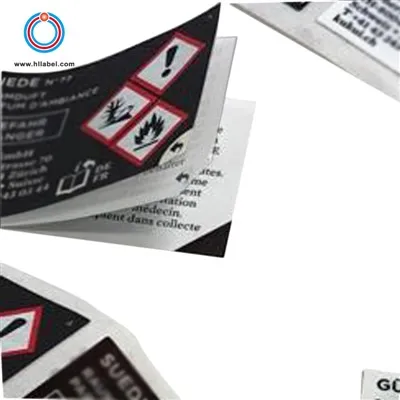
If you’re a brand or manufacturer looking to add foldable labels to your fabric products, let’s talk. Whether you’re making athletic wear, bedding, children’s clothing, or industrial workwear, we can help you design a label that fits your fabric, your budget, and your customers’ needs. Don’t settle for labels that fall off after a few washes, or scratchy tags that hurt your brand’s reputation. Reach out, and we can send you test samples tailored to your specific fabric, no strings attached. We’ve been working with fabric professionals for years, and we know exactly what it takes to make a label that lasts.
Multi-layer Labels References:
- American Association of Textile Chemists and Colorists (AATCC). (2022). Wash Durability of Adhesive Labels for Textile Applications. Technical Report 156-2022.
- National Fire Protection Association (NFPA). (2021). Standard for Flame-Resistant Materials for Apparel (NFPA 701).
- Textile Institute. (2020). Elongation Requirements for Stretch Fabrics in Activewear. Technical Brief TB-017-2020.
- Global Organic Textile Standard (GOTS). (2023). Certification Requirements for Textile Labels. Version 6.0.
Huizhou Huilong Printing Company Limited
As one of the most professional foldable label manufacturers in China, we have world-leading production equipment and strong manufacturing capabilities. Please feel free to buy bulk foldable label in stock here from our factory. Also, pricelist is available.
Address: Xin’er Group, Xiamazhuang, Huicheng District, Huizhou City, Guangdong Province
E-mail: huilong278@163.com
WebSite: https://www.huilonglable.com/
