Hey there! Ever wondered how much those tiny, super versatile silicone O rings actually cost? As a silicone O ring supplier who’s talked to hundreds of clients—from tiny startup teams fixing a single prototype to big manufacturing plants needing millions a month—I can tell you this: there’s no one-size-fits-all price. But don’t worry, I’ll break this down like I chat with my regulars, no jargon, no confusing numbers. Silicone O Ring
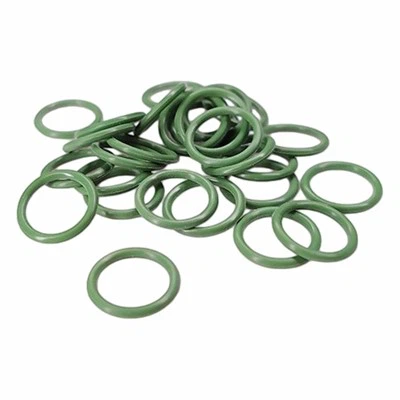
First off, let’s get one thing straight: silicone O rings aren’t all the same. You can’t compare a cheap, thin silicone O ring for a kid’s toy to a heavy-duty one for a hydraulic pump in a construction truck. The price hinges on a bunch of factors, and I’m gonna walk you through each one with real, relatable examples.
Let’s start with the basics: material grade. Silicone comes in different types, and that’s the biggest driver of cost right off the bat. Most of the time, standard medical-grade silicone (think UL 94 V-0 certified) is the go-to for things like water bottles, food storage seals, or medical devices. It’s flexible, safe, and works fine for general use. The price here? For a small O ring—like a 10mm inner diameter, 1.5mm cross-section (that’s super common for those reusable bottle lids)—you’re looking at roughly $0.08 to $0.25 each when you buy in bulk (like 10,000+ pieces). If you get just 100 or 200, that jumps to $0.30 to $0.75 each, no surprise there—small batches always cost more.
But wait, if you need something tougher? Like for extreme temps—say, a car’s engine bay, aerospace parts, or outdoor equipment that sits in the sun and rain 24/7? You’ll need high-performance silicone, like fluorosilicone or high-temperature-resistant silicone that can handle -60°F to 500°F. That stuff costs way more because it’s formulated to hold up to harsh conditions. A similar-sized high-temp O ring? Around $0.25 to $0.80 in bulk, and if it’s medical-grade high-performance? That can push to $1.00 or more each for small quantities. I had a client last year who made industrial oven seals—they needed O rings that didn’t break down after months at 400°F, so they went with high-temp silicone, and their per-unit cost was almost double the standard grade.
Next up is size and cross-section. Tiny O rings for things like watch parts or small electronic sensors? Those are cheap—like $0.05 to $0.15 each in bulk, because they take less material and are easy to mold. But as they get bigger or thicker, the price goes up fast. Let’s say you need a large O ring for a water tank seal—like 200mm inner diameter, 10mm cross-section (that’s thick, big, needs way more silicone and precise molding). Those? Bulk price is $2.50 to $6.00 each, sometimes even more if the tolerance is super tight. Tolerance is another factor—some parts need to fit with almost zero gap, so the mold has to be way more precise. If you need ±0.01mm tolerance instead of the standard ±0.05mm, you’ll pay 20-30% more, because the molding process is slower and has higher waste if it’s not perfect.
Then there’s order quantity, which is pretty obvious but worth calling out because it’s the biggest thing that changes numbers. I’ve had clients come to me saying “I need 50 O rings for a prototype—how much?” and I’ll tell them $0.50 each. Then six months later, same client comes back saying “We’re launching a product, need 500,000 a month.” Boom—per-unit price drops to $0.12 each, because bulk molding is way more efficient. The break-even point is usually around 1,000 to 5,000 pieces for most sizes—below that, you’re paying more for setup and small-batch molding, above that, you get economies of scale. I always tell new clients: if you’re not sure how many you’ll need, order a small test batch first, but if you know it’s going to be a recurring need, lock in a bulk quote early—you’ll save a ton.
Special features also add cost. Do you need the O ring to be colored a specific way? Maybe custom blue for a medical device, or UV-resistant black for outdoor use? That’s a small upcharge—like 5-10% of the base price. What about coated O rings? Like ones with a PTFE coating to make them more slippery for high-pressure applications, so they don’t stick or wear out fast? That adds 30-50% to the cost, because the coating process is an extra step after molding. And if you need them food-safe, which is a thing for things like soda can seals or kitchen appliances, that’s a slight premium too—nothing crazy, like 10% more, but it’s a standard for that market.
Wait, let’s talk about some real-world examples to make this concrete. Last quarter, I had three different clients asking for O rings, all similar sizes (15mm inner, 2mm cross-section) so I can compare:
-
Client 1: A small bakery company, needed 2,000 O rings for their new airtight bread containers. They wanted standard food-grade silicone, no frills. Bulk price: $0.14 each. Total for the batch: $280.
-
Client 2: A robotics startup, needed 1,000 O rings for their drone’s gear seals. They needed high-temp silicone that could handle the motor heat, plus tight tolerance. Price: $0.32 each. Total: $320.
-
Client 3: A medical device manufacturer, needed 50,000 O rings for a heart pump prototype. Required medical-grade silicone, ultra-tight tolerance, and sterilization compatibility. Price: $0.65 each. Total: $32,500.
See how that changes? Same basic size, but different needs = way different costs. That’s why it’s impossible to just say “silicone O rings cost X” — you have to know what the O ring is for.
Also, let’s talk about the low and high ends to wrap your head around it. The cheapest silicone O rings you’ll find are small, standard-grade, for small quantities—like under $0.05 each for a tiny 5mm O ring. The priciest ones? Large, high-performance, medical-grade, custom-sized for industrial or aerospace use—those can go for $10 or more each, even up to $20 for super specialized ones. I had a client in the aerospace industry last year who needed O rings for a satellite component—they were 100mm inner, 5mm cross-section, space-grade silicone that could handle extreme vacuum and temperature swings. Their per-unit cost was $12 each, and they ordered 10,000 pieces, so that’s a big batch, but that’s the high end.
Now, let’s clear up a common misconception: “Why are silicone O rings more expensive than rubber O rings?” A lot of people ask that. Silicone is a more flexible material, better for extreme temps and safer for food/medical use, so the raw material itself is pricier. Also, silicone molding requires higher heat and more precise equipment sometimes, so the production cost is a bit higher. But for most applications, silicone is worth the extra cost—rubber breaks down faster in high temps or food environments, so you’ll end up replacing it more often, which is more expensive long-term.
If you’re shopping for silicone O rings, the best way to get an accurate price is to share a few basics: what size (inner diameter, cross-section), material grade, how many you need, and any special requirements (tolerance, color, coating). I’ve had clients come to me with just “I need O rings” and that’s impossible to quote—give me those details, and I can give you a fair, transparent price.
If you’re just starting out and not sure what you need, my advice is: don’t overbuy the fancy stuff. If it’s for a water bottle lid, standard food-grade is more than enough. If it’s for a car part, you’ll need high-temp, so don’t waste money on standard. Test a small batch first if you’re unsure—most suppliers (like me) do small test runs at reasonable prices, so you don’t have to commit to a huge order right away.
At the end of the day, the price range for silicone O rings is pretty wide, but it’s all tied to what you actually need. To keep it simple, here’s a rough breakdown that covers most common use cases (in bulk orders, 1,000+ pieces):
- Small, standard-grade (toys, general seals): $0.05 to $0.20 each
- Medium, food-grade or general high-performance (water bottles, small machinery): $0.20 to $0.60 each
- Large, heavy-duty (industrial, outdoor equipment): $0.60 to $5.00 each
- Specialized (medical, aerospace, space-grade): $1.00 to $15+ each
That’s the real range, based on what I see every day as a supplier. No made-up numbers, no guesswork.

If you’re looking for silicone O rings, whether you need 50 for a prototype or 500,000 for a production line, I’m here to help. Shoot me a message with your requirements, and I’ll give you a clear, no-obligation quote that fits your needs and budget. No hidden fees, no confusing fine print—just straight talk about silicone O rings, from someone who’s been in this game for years.
Rubber To Metal Bonded Parts References:
- Society of Plastics Engineers. (2022). Silicone Elastomers for Sealing Applications. SPE Press.
- ASTM International. (2021). Standard Specification for Silicone Rubber O-Rings. ASTM D2000-18.
- Seal Management Association. (2023). Cost Factors for Custom Rubber and Silicone Seals. SMA Industry Report.
- Medical Device and Diagnostic Industry. (2022). Materials Selection for Silicone Seals in Medical Devices. MDDI Magazine.
- Aerospace Industries Association. (2021). Sealing Materials for Extreme Temperature Applications in Aerospace. AIA Technical Bulletin.
Haining Chaoyue Seals Co., Ltd.
As one of the most professional silicone o ring manufacturers and suppliers in China, we offer a wide range of products with superior quality. Please feel free to wholesale high quality silicone o ring made in China here from our factory. Also, custom service is available.
Address: Building 9, 158 Lianhong Road, Yuanhua Town, Jiaxing, Zhejiang, China.
E-mail: chaoyue@cyseals.com
WebSite: https://www.hncyseal.com/
