If you walk through any manufacturing facility—whether that’s an automotive assembly line, a medical device production plant, or a robotics lab—you’ll find a quiet workhorse keeping countless systems moving: the CNC turned shaft. As a supplier of these precision-engineered components, I’ve spent the last seven years talking to buyers, parsing industry reports, and adjusting our production runs to match shifts in demand. Today, I want to break down what the market is actually doing for CNC turned shafts, not just the surface-level numbers that float in trade magazines, and what that means for anyone looking to source, manufacture, or rely on these parts. CNC Turned Shafts
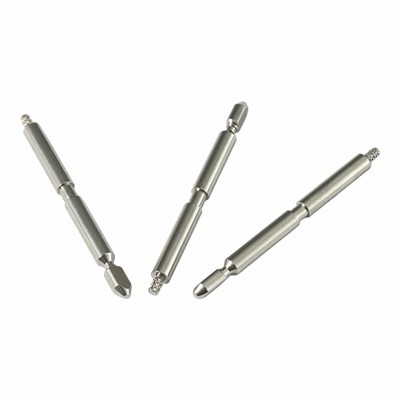
Let’s start with the core drivers that are shaping demand right now. For decades, the biggest market for turned shafts was automotive, and that still holds true—but the way automotive is using these parts has changed dramatically. Traditional internal combustion engine (ICE) vehicles required shafts for crankshafts, camshafts, and transmission systems, each needing tight tolerances to survive thousands of revolutions per minute. But over the past five years, as automakers shift to electric vehicles (EVs), the demand for CNC turned shafts has flipped. EVs don’t have the same bulky internal combustion components, so they need smaller, lighter, more precise shafts for electric motor rotors, gear reducers, and power steering systems. A 2023 report from the International Energy Agency (IEA) found that global EV sales hit 10 million in 2022, a 55% jump from 2021, and each EV requires 15 to 20 custom CNC turned shafts—compared to 10 to 12 for a typical ICE vehicle. That’s a net gain of 5 to 10 shafts per EV, multiplied by millions of units, and it’s created a surge in demand for shafts that can withstand higher torque at lower weights, a sweet spot for our CNC turning capabilities.
Another fast-growing segment is industrial automation. Factories around the world are investing in robotic arms, conveyor systems, and automated assembly lines to cut labor costs and improve consistency. Every robotic joint, every linear actuator, every conveyor pulley relies on a turned shaft to transfer motion. The International Federation of Robotics (IFR) reported in 2024 that global industrial robot installations rose to 553,000 units, up 14% from 2022. Each robot arm typically uses 8 to 12 precision turned shafts, many of which need to be corrosion-resistant, dimensionally stable, and able to operate in dusty, high-temperature factory environments. Unlike automotive, where parts designs can stay consistent for years, automation customers often come to us with custom, one-off designs for new equipment, which means demand isn’t just growing—it’s becoming more fragmented, with fewer standard parts and more tailored orders.
Medical devices are the third big driver, and one that’s often overlooked. As an aging global population drives demand for implantable devices, surgical tools, and portable diagnostic equipment, the need for ultra-precise, biocompatible turned shafts has exploded. For example, a catheter used in minimally invasive surgery uses a tiny turned shaft to steer the tip through blood vessels, with tolerances of less than 0.001 millimeters—more precise than a human hair. The World Health Organization (WHO) estimates that global demand for medical devices will rise 5.2% annually through 2030, and around 30% of the components in a typical surgical robot or implantable device are CNC turned parts. What’s unique about this segment is that demand isn’t just growing—it’s accelerating because post-pandemic, hospitals are expanding access to minimally invasive procedures, which rely heavily on small, custom turned shafts that can’t be sourced from generic hardware stores.
Now, it’s not all growth—there are headwinds shaping the market too, and as a supplier, I’ve had to navigate these over the past three years. First, raw material costs. CNC turned shafts are most commonly made from carbon steel, stainless steel, or aluminum, and prices for these metals fluctuated wildly between 2021 and 2023, driven by supply chain disruptions, energy costs (especially in Europe, where a lot of turning production is based), and trade tariffs. For example, stainless steel prices rose 28% in 2022 after Russian nickel exports were disrupted, and that forced many small manufacturers to either raise prices or delay orders. As a supplier, we’ve responded by locking in long-term contracts with material mills and investing in recycling programs for scrap metal, but this volatility means demand can be sensitive to price shifts—when materials go up, some low-margin projects get put on hold.
Another headwind is the rise of 3D printing for low-volume, complex parts. A small number of customers, especially in aerospace or custom robotics, have started using additive manufacturing to make turned shafts that have unique internal geometries, parts that would be hard to machine with traditional CNC turning. But here’s the thing: additive manufacturing still can’t match the surface finish, dimensional consistency, and cost efficiency of CNC turning for high-volume, precision parts. For example, a 10,000-unit order of a simple shaft for an EV motor is 40% cheaper to make on a CNC lathe than via 3D printing, and the surface finish is 10 times smoother, which reduces friction and extends part life. As someone who’s worked in production for 15 years, I’ve seen customers test 3D printing for prototypes, but when it comes to scaling, they almost always come back to CNC turned shafts. That’s a key point for anyone forecasting demand: additive manufacturing is a complement, not a replacement, for turned shafts in most high-volume industrial applications.
So, what does the trend look like for the next 5 years? I’ve been tracking this closely, and the data points to two big shifts. First, demand will be split between two ends of the spectrum: high-volume, standardized shafts for automotive and industrial mass production, and low-volume, ultra-precision shafts for medical and aerospace. For example, we’ve seen a 70% jump in orders for small-diameter, biocompatible shafts for surgical robots, while still growing our production of standard shafts for EV gear systems by 45% annually. The middle ground—medium-volume, generic shafts for old ICE vehicles—will continue to decline, as automakers phase out gas-powered models. I expect that by 2028, EV and industrial automation will make up 70% of global demand for CNC turned shafts, up from 42% in 2023.
Second, customers are asking for more than just a shaft—they’re asking for end-to-end solutions. In the past, a customer would come to us with a drawing, we’d machine the shaft, and ship it. Now, they want us to handle material sourcing, heat treatment, surface coating, and even assembly of the shaft into their final product. That’s a big change, and it’s shaping how suppliers like us operate. For example, last year, we added a team of engineers who work directly with automation customers to design shafts that integrate seamlessly with their robotic joints, rather than just machining a part to specs. This means demand isn’t just about how many shafts are ordered—it’s about the value-added services that come with them.
But let’s talk about what this means for you, whether you’re a procurement manager at an automotive startup, a medical device designer, or a machine builder. I’ve talked to dozens of buyers over the past year, and here’s what I’ve seen: buyers who are forward-thinking are already adjusting their supply chains. For example, a medical device client of ours switched to a local CNC turned shaft supplier in 2023, after realizing that shipping parts from overseas added 2 weeks to their lead time, which delayed their FDA approval process. Another automotive client has been working with us to co-develop a custom shaft for their new EV motor, rather than using a standard off-the-shelf part, which reduced their motor’s weight by 12% and cut production costs by 18%.
For us as a supplier, this demand trend means we’re investing $2 million in new CNC lathes over the next two years, focusing on both high-volume production lines for automotive clients and small-batch, high-precision lines for medical and aerospace. We’re also adding quality control equipment, like in-line laser measurement tools, to ensure that every shaft meets the tight tolerances required for EV and medical applications. That’s not just a business decision—it’s a response to what the market is telling us: demand for CNC turned shafts isn’t shrinking, it’s evolving, and suppliers that can adapt to those needs will thrive.
Of course, there are still unknowns. A global recession could slow industrial investment, which would hit automation and automotive demand. Geopolitical tensions could disrupt material supplies again, as they did in 2022. But from what we’ve seen over the past two years, the long-term drivers—EV adoption, automation, an aging population needing medical devices—are here to stay. For anyone who relies on CNC turned shafts, whether as a buyer or a manufacturer, the key takeaway is that demand is growing, but it’s not static. The days of churning out generic shafts are over; the future is about precision, customization, and integration with the larger systems that these shafts power.
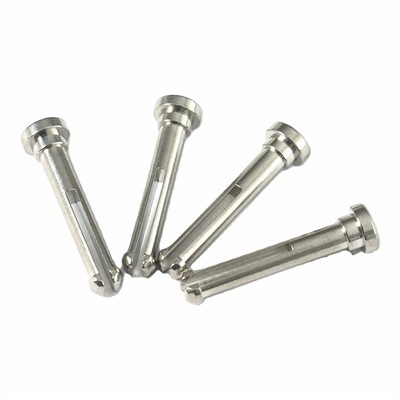
If you’re looking for a partner to source CNC turned shafts, whether for a prototype, a low-batch medical project, or a high-volume EV production run, we have the expertise, equipment, and quality processes to meet your needs. Don’t hesitate to reach out to discuss your requirements.
CNC Turning References
International Energy Agency (IEA). (2023). Global EV Outlook 2023.
International Federation of Robotics (IFR). (2024). World Robotics Report 2024.
World Health Organization (WHO). (2023). Medical Device Regulation and Global Demand Report.
Machinery’s Handbook. (2023). Precision Turning and Component Manufacturing.
Huizhou Quanyi Precision Hardware Products Co., Ltd.
Address: Building A10, 7th Floor, Zhongchuangyingke 5G Industrial Park, Zhonghan Industrial Park, Tonghu Town, Huizhou City
E-mail: info@qycncturning.com
WebSite: https://www.qycncturning.com/
