If you’ve ever stood inside a modern flour mill—even one that’s been up and running for decades—you might not notice the quiet, unassuming parts that keep operators safe while wheat turns into the fine, consistent flour that ends up on grocery store shelves. As a supplier of flour mill service equipment, I’ve spent years seeing firsthand how safety isn’t an afterthought; it’s built into every component, bolted onto every machine, and baked into the daily maintenance routines we help our customers put in place. When we design or refurbish a mill, we don’t just focus on throughput or flour quality—we focus on the people running the machines, because a mill that shuts down due to an avoidable injury is a mill that can’t serve its community. Flour Mill Service Equipment

Let’s start with the biggest risk in any flour mill: dust. Wheat flour, especially the fine, powdery kind produced by modern roller mills, is highly combustible. A single spark from a faulty wire, a overheated bearing, or even static electricity can trigger an explosion that levels an entire facility. That’s why the first layer of safety in every modern flour mill service equipment setup is a comprehensive dust management system—not just a vacuum to clean floors, but engineered solutions built into the equipment itself. I’ve installed dust extraction hoods directly onto roller mill stands, sifter casings, and elevator legs, each sized to capture 99.9% of fine flour dust before it can accumulate in hard-to-reach corners. Those hoods connect to central extraction units with HEPA filters, which don’t just pull dust out of the air—they contain it, so it doesn’t get recirculated through the mill. But even with that, we add explosion suppression systems. These are small, unobtrusive units mounted on ductwork and large enclosures that detect a sudden spike in pressure from a dust burn and release a non-toxic, flame-suppressing agent in milliseconds to stop an explosion before it grows. I’ve seen these systems work first-hand: a customer’s mill had a small dust flash in a sifter, and the suppression unit kicked in before anyone even heard a loud noise. The sifter was undamaged, no one was hurt, and the mill was back up in an hour. That’s the kind of safety that makes all the difference.
Next, consider the moving parts. A flour mill is full of conveyors, roller mills, and augers that spin at hundreds of revolutions per minute. Before we modernize a mill, most of these machines have unguarded moving parts—something that was standard 50 years ago, but today is a critical safety gap. We install fixed guards on all drive shafts, sprockets, and nip points; these are heavy metal or plastic covers that can’t be removed without tools, so operators can’t accidentally reach in while the machine is running. But we don’t stop at fixed guards. All modern flour mill service equipment also has lockout/tagout (LOTO) systems, which are non-negotiable for any mill we work with. LOTO means every power switch for a machine has a slot where an operator can slide their own personal lock, so no one else can turn on the machine while they’re cleaning, repairing, or unjamming it. I always tell new customers that LOTO isn’t just a compliance thing—it’s the difference between a mill where a maintenance worker can safely loosen a bolt on a conveyor and a mill where someone gets their arm pulled into the machinery because a coworker thought the machine was off. We also add emergency stop (E-stop) buttons every 10 feet along walkways and on every piece of equipment. These are bright red, large, and easy to reach even in a hurry, and they cut power to the entire machine instantly. I’ve worked with smaller mills that used to have only one E-stop at the main control panel, which was too far away if something went wrong at the far end of a long conveyor. Adding those extra E-stops is one of the first upgrades we do when we service a mill, and the operators always tell us it’s a game-changer.
Another risk that’s easy to overlook is thermal overload. Roller mills, which crush wheat kernels into semolina and flour, generate a lot of heat when they’re running continuously. If the temperature gets too high, it can not only damage the roller surfaces (which would ruin flour quality) but also ignite any dust that’s built up nearby. That’s why every modern roller mill we supply has temperature sensors mounted directly on the roller bearings and the roller surfaces. These sensors are wired to the mill’s control system; if the temperature rises above a safe threshold (usually around 180°F, which is well below the ignition point of flour dust), the system will automatically slow the rollers to a stop, send an alert to the control room, and even lock the machine out until an operator can investigate. I remember a customer in the Midwest who had a faulty bearing in one of their old mills—before we retrofitted it with temperature sensors, they would have run the mill until the bearing seized, which would have caused downtime and potential dust ignition. The sensor caught it at 165°F, we replaced the bearing during a scheduled shift, and the mill never missed a full day of production. That’s how preventive safety works. We also add pressure relief valves to all steam lines and hydraulic systems, which are used to power parts of the mill like sifter shakers and gate valves. If pressure builds too high—usually due to a faulty valve or a blockage—the valve opens automatically to release pressure, preventing a burst pipe that could injure operators or flood the mill with water (which would ruin flour stock and create mold risks).
For mills that handle large volumes of grain in bucket elevators—those tall vertical systems that lift wheat from one floor to another—there are unique safety risks. A broken elevator leg can collapse, spilling hundreds of pounds of grain and flour, and a jammed elevator can cause the chain to snap, sending parts flying. So when we service or supply bucket elevator systems, we add two key safety features: belt alignment sensors and chain tension monitors. Belt alignment sensors detect when the elevator belt is starting to shift off the pulleys, which is a sign of a coming jam or failure, and they trigger an alarm to stop the elevator before it breaks. Chain tension monitors work the same way for mechanical chain-driven elevators; if the chain becomes too loose or too tight, the system alerts operators to adjust it before it snaps or breaks. We also install emergency pull cords along the entire length of the elevator walkway. These are thin, red cords mounted just above head height, so if an operator sees a problem with the elevator, they can pull the cord anywhere along the line and stop the elevator instantly, even if they’re not near the control panel. I’ve had operators tell me these pull cords are their favorite safety feature—one time, an operator noticed a piece of stray metal in the elevator while he was cleaning, and he pulled the cord to stop the elevator before the metal could damage the belt or cause a dust release.
Let’s not forget about control system safety. Modern flour mills are run by programmable logic controllers (PLCs), which automate everything from feeding grain to adjusting roller gaps. But these digital systems can have glitches, so we add safety interlocks throughout. For example, if a maintenance door on a sifter is opened, the interlock cuts power to the sifter’s shaker motor automatically—so an operator doesn’t reach into a spinning sifter casing by mistake. We also add fail-safe controls, which means if the power goes out, all machines shut down automatically, and they can only be restarted in a controlled sequence to prevent sudden surges that could cause injury or damage. A lot of older mills have manual controls that would leave a conveyor running for 10 minutes after power comes back on, which is a hazard. We upgrade those to fail-safe PLCs as part of our service, and it’s one of the improvements that operators notice most.
Training is a safety device too, and as a supplier, we don’t just sell equipment—we help our customers train their teams. We host on-site workshops where operators learn how to use the LOTO systems, how to check dust filters, how to respond to an E-stop, and how to spot early signs of bearing wear or dust buildup. We also provide digital checklists that operators can use at the start of every shift to inspect safety features before turning on the machines. I always tell customers that no safety device works if no one knows how to use it, so training isn’t optional—it’s part of the package when we service their flour mill equipment.
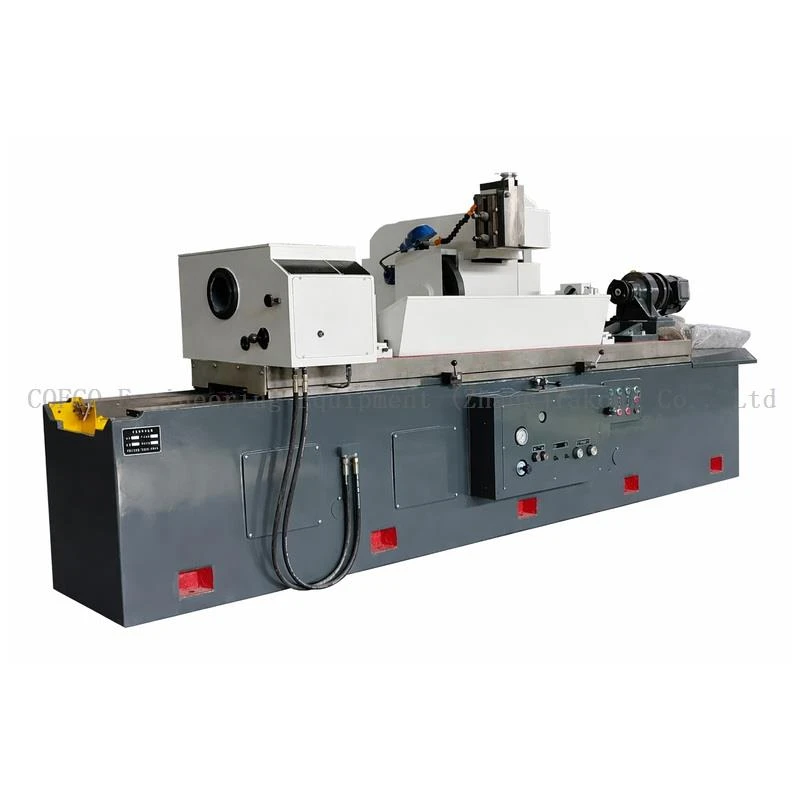
At the end of the day, every safety device we install on a flour mill service equipment isn’t just a piece of metal or a sensor. It’s a promise: that when an operator arrives at work, they’ll go home to their family at the end of the day. That when a mill runs smoothly, it’s because we built it to protect the people who make that possible. If you’re looking to upgrade your mill’s safety features, or if you need service or new equipment tailored to your operation, we’re here to help. We work with mills of all sizes, from small local operations to large commercial facilities, and we take the time to understand your specific needs so we can build safety into every part of your setup.
Feed Mixing Equipment References:
- National Fire Protection Association. (2020). NFPA 61: Standard for the Prevention of Fires and Dust Explosions in Agricultural and Food Processing Facilities.
- Occupational Safety and Health Administration. (2022). Safety and Health Guidelines for Grain Handling Facilities.
- Mill Safety Association. (2021). Modern Flour Mill Safety Systems: A Practical Guide for Operators and Service Providers.
- American Society of Agricultural and Biological Engineers. (2019). Safety Standards for Grain Handling and Processing Equipment.
COFCO Engineering Equipment (Zhangjiakou) Co., Ltd.
As one of the most professional flour mill service equipment manufacturers and suppliers in China, we also support customized service. Please feel free to wholesale advanced flour mill service equipment for sale here from our factory. Quality products and reasonable price are available.
Address: No.4 ZhongLiang Street, high-tech industrial development zone, Zhangjiakou, Hebei, PRC
E-mail: mayihui@cofco.com
WebSite: https://www.ceeflourmill.com/
