When it comes to warehouse storage and logistics solutions, wire mesh containers are a staple in many industries. As a wire mesh container supplier, I often get asked the question: "How much weight can a wire mesh container hold?" This seemingly simple question doesn’t have a one – size – fits – all answer, as the weight – bearing capacity of wire mesh containers depends on several key factors. In this blog, I’m going to delve into these factors, provide some general guidelines, and discuss how we, as a supplier, ensure that our products meet the diverse needs of our customers. Wire Mesh Container
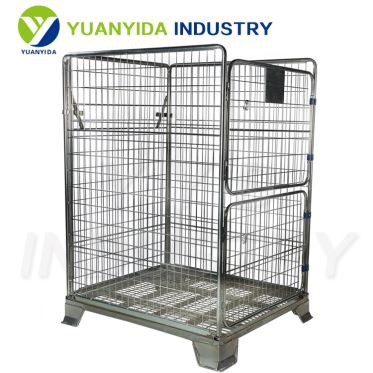
Factors Affecting the Weight – Bearing Capacity
Material Quality
The quality of the wire used in the construction of the container is of utmost importance. High – quality steel wires with appropriate tensile strength are essential for a container to bear heavy loads. For instance, low – carbon steel wires are commonly used in wire mesh containers. These wires are known for their good ductility and weldability. However, the carbon content and the manufacturing process can significantly affect their strength. A wire with higher carbon content within a reasonable range generally has greater strength, but it may also be more brittle. Our company sources high – grade steel wires from reliable suppliers. We conduct strict quality control checks on the incoming materials to ensure that they meet our standards for tensile strength and other mechanical properties.
Wire Thickness
Thicker wires can naturally support more weight. The thickness of the wire used in a wire mesh container is typically measured in gauge. A lower gauge number indicates a thicker wire. For light – duty applications, such as storing small parts or office supplies, a wire with a higher gauge (thinner wire) may be sufficient. However, for heavy – duty industrial use, like storing large machinery parts or heavy metal products, a lower – gauge (thicker) wire is required. For example, a container made with a 6 – gauge wire will have a much higher weight – bearing capacity than one made with a 12 – gauge wire. We offer a variety of wire thicknesses to meet different customer requirements, and we can provide technical advice on which thickness is most suitable for a particular application.
Mesh Size
The size of the mesh also plays a role in determining the weight – bearing capacity. A smaller mesh size distributes the load more evenly across the container, which can increase the overall strength. When the mesh size is small, the wires are closer together, providing more support points for the stored items. Conversely, a larger mesh size may be suitable for lighter loads or when visibility of the contents is more important. For example, in a warehouse where workers need to quickly identify the items stored in the containers, a slightly larger mesh size might be preferred. But if the container is to hold heavy, irregularly shaped objects, a smaller mesh size is a better choice. We can customize the mesh size according to the specific needs of our customers, striking the right balance between load – bearing capacity and functionality.
Frame Structure
The frame of the wire mesh container provides additional support and stability. A well – designed and sturdy frame can significantly enhance the weight – bearing capacity. The most common frame materials are steel profiles, such as angle iron or square tubing. The thickness and strength of these profiles are crucial. A container with a thicker and stronger frame can better withstand the pressure exerted by heavy loads. We use high – quality steel profiles in the construction of our container frames. Our frames are welded using advanced welding techniques to ensure a strong and durable connection, preventing the frame from deforming under heavy loads.
Design and Assembly
The overall design and assembly of the wire mesh container also impact its weight – bearing capacity. For example, containers with reinforced corners or additional cross – bracing are more likely to handle heavy loads. The way the wire mesh is attached to the frame is also important. A secure and tight attachment ensures that the load is evenly distributed between the mesh and the frame. Our design team takes into account all these factors when creating new container models. We use computer – aided design (CAD) software to simulate the performance of different designs under various loads, ensuring that our products are optimized for strength and durability.
General Weight – Bearing Capacity Guidelines
Based on our experience and industry standards, we can provide some general guidelines for the weight – bearing capacity of wire mesh containers.
Light – Duty Containers
Light – duty wire mesh containers are typically used for storing small, lightweight items such as plastic parts, stationery, or small electronics. These containers usually have a wire thickness of around 10 – 14 gauge and a relatively large mesh size. Their weight – bearing capacity can range from 100 to 500 kilograms. They are often used in office environments, retail stores, or small workshops.
Medium – Duty Containers
Medium – duty containers are suitable for storing medium – sized items like automotive parts, small tools, or food products. They are made with a wire thickness of 6 – 10 gauge and a medium – sized mesh. The weight – bearing capacity of medium – duty containers typically ranges from 500 to 1500 kilograms. These containers are widely used in warehouses, distribution centers, and manufacturing facilities.
Heavy – Duty Containers
Heavy – duty wire mesh containers are designed for storing large, heavy items such as machinery parts, steel bars, or large metal castings. They have a wire thickness of 4 – 6 gauge and a smaller mesh size. Additionally, their frames are usually made of thicker steel profiles. Heavy – duty containers can hold weights of 1500 kilograms or more, with some specialized models capable of holding several tons. These containers are commonly used in industries such as construction, mining, and heavy manufacturing.
Ensuring Quality and Safety
As a responsible wire mesh container supplier, we take quality and safety very seriously. We have a comprehensive quality control system in place to ensure that every container we produce meets or exceeds industry standards.
Material Testing
Before production begins, we test all incoming materials to ensure their quality. We conduct tensile strength tests, hardness tests, and chemical composition analysis on the wires and frames. This helps us identify any potential issues with the materials and ensures that only high – quality components are used in our containers.
Production Monitoring
During the production process, our quality control team monitors every step. They check the welding quality, the accuracy of the mesh size, and the alignment of the frame. Any deviations from the specifications are immediately corrected to ensure that the final product is of the highest quality.
Load Testing
After production, we subject a sample of containers to load testing. This involves placing known weights on the containers and monitoring their performance. We check for any signs of deformation, damage, or failure. If a container fails the load test, we investigate the cause and make necessary adjustments to the production process.
Meeting Customer Needs
We understand that every customer has unique requirements when it comes to wire mesh containers. That’s why we offer a wide range of standard products and also provide custom – made solutions.
Standard Products
Our standard product range includes light – duty, medium – duty, and heavy – duty wire mesh containers in various sizes and configurations. These containers are designed to meet the most common needs of our customers and are available for immediate delivery.
Custom – Made Solutions
For customers with specific requirements, we offer custom – made wire mesh containers. Whether it’s a unique size, a special mesh pattern, or a specific weight – bearing capacity, our design and production teams can work with you to create a solution that meets your needs. We have the expertise and the equipment to handle complex custom projects, and we are committed to delivering high – quality products on time.
Conclusion

The weight – bearing capacity of a wire mesh container is determined by multiple factors, including material quality, wire thickness, mesh size, frame structure, and design. As a wire mesh container supplier, we are dedicated to providing our customers with high – quality products that meet their diverse needs. Whether you need a light – duty container for your office or a heavy – duty container for your industrial facility, we have the expertise and the resources to help you find the right solution.
Standard Fasteners If you are interested in our wire mesh containers or have any questions about their weight – bearing capacity, please feel free to contact us. Our sales team is ready to assist you with product selection, pricing, and any other inquiries you may have. Let’s work together to find the best storage solution for your business.
References
- ASTM International Standards on Steel Wires and Mesh Products
- Industry Reports on Warehouse Storage Solutions
- Technical Literature on Metal Fabrication and Welding
Qingdao Yuanyida Industrial and Trade Co., Ltd.
Qingdao Yuanyida Industrial and Trade Co., Ltd. is one of the most professional wire mesh container manufacturers and suppliers in China. Feel free to wholesale high quality and hot selling wire mesh container from our factory. There a wide selection of logistics trolleys at your choice. Also, customized service is available.
Address: Factory Add: No.1 Yunxing Rd, Yinghai Industrial Park, Jiaozhou, Qingdao, CHINA 266300
E-mail: info@qd-yuanyida.com
WebSite: https://www.yydindustry.com/
