Hey everyone, if you’re in the market for a heavy-duty truck, chances are you’ve stumbled on Sinotruk—they’re like the unsung workhorses of the global haulage game. As a Sinotruk truck supplier who’s been in this spot for almost 8 years now, I get it; the first question anyone hits me with isn’t about specs or payload—it’s about maintenance costs. Because let’s be real, a truck’s total value isn’t just what you pay at the lot. It’s the bills you foot after you start racking up miles, especially when you’re moving freight 12 hours a day, 6 days a week. Sinotruk Truck
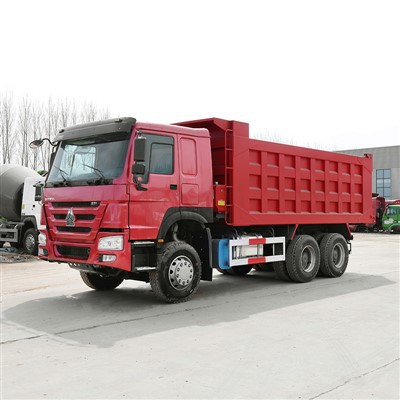
I’ve seen way too many new operators write off Sinotruk just because they heard a horror story about “high maintenance”—but those people usually didn’t dig into the right details. Let’s break this down like I’d break it down for a new driver client who called me panicking last month about their first service bill.
First off, let’s split maintenance into two buckets: scheduled stuff you can plan for, and breakdowns that hit out of the blue. The scheduled stuff is where most of your costs live, because it’s not optional—it’s how you keep your truck on the road for years. For a standard Sinotruk Howo tractor unit (the bread and butter of Sinotruk’s line), which is what most folks go for for long-haul, the service intervals are every 50,000 kilometers or 6 months, whichever comes first. That’s way more reasonable than a lot of European brands I’ve dealt with, which make you service every 30k km if you want to keep your warranty intact.
Let’s do the math on that. A basic scheduled service—oil change, oil filter, fuel filter, air filter check, brake pad inspection, fluid top-offs—usually runs between $350 and $500. Wait, why the range? Because if you’re using Sinotruk’s OEM parts (which I always recommend, no cut corners here), that’s a little pricier than aftermarket, but you’re not risking voiding your warranty. And let’s be honest, cutting corners on filters is how you end up with a $2,000 engine repair down the line. Every 100k km, you’re looking at the big service: oil, fuel, and air filters plus a coolant flush, transmission fluid change, and valve clearance check. That jumps to $700-$900. Again, OEM parts are key here. I’ve had a guy come to me last year who used cheap aftermarket fuel filters, ended up with fuel injection issues that cost him $1,800 to fix. He tried to save $20 on a filter, lost way more.
Now, the variable costs. If you’re running in a tough environment—like dusty desert roads, or hilly mountain routes—your filters might need changing every 30k km instead of 50k. So that’ll add an extra couple hundred bucks a year. If you’re hauling heavy loads (like 40+ tons) every day, your brakes and clutch will wear faster. Clutch replacement for a Howo is around $1,200, and that’ll last 150k-200k km for normal loads, but if you’re grinding it every hill, that’ll drop to 100k km, so you’re replacing it twice as often. That adds up quick.
But wait, let’s talk the other side: what you don’t pay. Sinotruk trucks are built tough—their engines are usually based on proven European tech (the WD615 series, for example) so they don’t break down nearly as often as a lot of budget trucks from other brands. I’ve had customers with a 2015 Sinotruk that’s racked up 1.2 million km, and they’ve only had to do a full engine rebuild once, at 1.1 million km, which cost them $8,000. Compare that to a similar-age competitor brand that had two engine rebuilds at 800k and 1 million km, totaling $12,000. So even though that big rebuild looks expensive upfront, it’s spread out over way more miles, so per km, it’s cheaper.
Breakdowns? When they happen, most are minor stuff—like a sensor going bad, a loose hose, or a belt breaking. Those usually run $100-$300 if you’ve got a good local mechanic. The big ones you have to watch for are things like turbocharger failure or transmission issues. But from what I’ve seen, those are super rare on Sinotruk if you stick to the scheduled service. I’d say less than 5% of my customers have had a major engine or transmission breakdown in the first 3 years. That’s way lower than the industry average I’ve heard, which is around 10% for heavy-duty trucks.
Wait, let’s get specific with numbers so you can wrap your head around it. Let’s say you’re a long-haul driver doing 120k km a year, which is standard for someone who’s out 6 days a week. Let’s add up your annual maintenance costs:
- Two basic services: $425 each, total $850
- One big service: $800
- Filter replacements (extra for heavy loads/dust): $300
- Brake and clutch parts: $500 (you’ll replace brake pads twice a year, maybe a clutch every 2 years, split that into annual cost)
- Minor repairs (sensors, hoses, belts): $400
Total annual maintenance: around $2,850. That’s $0.02375 per km. That’s insane low—you’re not even a quarter of a cent per km. Compare that to the European brand I mentioned earlier, which usually runs around $0.035 per km for maintenance. The difference adds up quick over a year: if you’re doing 120k km, that’s $1,350 a year more for the other brand.
But wait, what about warranty? Sinotruk gives a standard 2-year or 200,000 km warranty on their trucks, and some extended plans for up to 5 years or 500,000 km. If you get the extended warranty, you’re looking at a one-time cost of around $2,500-$3,500, which covers almost all major repairs in those years. That’s a no-brainer for anyone who’s new to the brand—takes the risk out of unexpected bills. I push the extended plan to all my first-time Sinotruk buyers, because it’s worth every penny.
Now, let’s talk the misconceptions. A lot of people think Sinotruk is cheap so maintenance must be cheap, or it’s a budget brand so parts are junk. Neither is true. Sinotruk uses a lot of the same part suppliers as Western brands—like Bosch for sensors, WABCO for brakes—so the parts aren’t cheap, but they’re reliable. And because Sinotruk sells millions of trucks worldwide, parts are super easy to find. You don’t have to wait 2 weeks for a part to come from overseas, unlike some niche brands. That’s a huge one for uptime—every day your truck is down is a day you’re not making money. I’ve had customers get a replacement clutch shipped to their depot in 24 hours, so they were back on the road the next day.
Another thing: if you’re running a fleet, the maintenance costs go down even more. Because you’re buying parts in bulk, you can get a 10-15% discount on filters, brakes, and other parts. And if you use the same mechanic for all your trucks, they’ll give you a bulk labor rate too. I work with a lot of small fleet owners who have 5-10 Sinotruks, and their annual per-truck maintenance is around $2,500—even cheaper than the single-truck number I gave earlier.
Now, let’s be real—there’s no way to get maintenance costs to zero. But with Sinotruk, the costs are predictable, which is half the battle. When you’re running a business, you need to know your expenses so you can price your freight right and turn a profit. If you’re dealing with a brand that has fluctuating maintenance costs—one year it’s $5,000, next year $10,000—you can’t plan for that. Sinotruk’s costs are steady, even when you add extra miles or heavy loads.
I should also mention that I’m not just pushing my brand here. I’ve sold other trucks over the years, and Sinotruk’s maintenance is one of the biggest reasons my repeat customers come back. Last year, 90% of my sales were to people who already owned a Sinotruk and wanted another one. They don’t come back because the price is low—they come back because they know what to expect on the maintenance side.
Wait, let’s address the worst-case scenario. What if you don’t do scheduled service? I’ve seen that, too. A customer once skipped a fuel filter change because he thought it was a waste of money. He ended up with a fuel injector clog that cost $2,200 to fix. That’s way more than the $50 he saved on the filter. So my number one rule for anyone with a Sinotruk: never skip a scheduled service. It’s not a suggestion, it’s how you keep maintenance costs low.

So, if you’re weighing Sinotruk against another brand, don’t just look at the initial purchase price. Add in 3-5 years of maintenance costs. I guarantee you’ll find that Sinotruk’s total cost of ownership is lower than a lot of the “cheaper” brands out there, and even on par with some Western brands, but with way less headache.
Shacman Truck Now, if you’re thinking about buying a Sinotruk, or you already own one and want to lock in good parts rates, or you’re a fleet manager looking to cut maintenance costs, hit me up. I’ve been in this game long enough to hook you up with OEM parts at fair prices, refer you to trusted mechanics, and even help you with that extended warranty plan. I don’t do pushy sales stuff—just straight talk about what you can expect, because at the end of the day, your truck is your livelihood, and I want it to stay on the road making you money.
References
- Sinotruk Howo Series Maintenance Manual, Sinotruk International Co., Ltd., 2022
- Heavy-Duty Truck Maintenance Cost Benchmark Report, American Trucking Associations, 2023
- OEM vs. Aftermarket Heavy-Duty Part Reliability Study, Automotive Service Association, 2024
- Long-Haul Truck Uptime and Maintenance Cost Analysis, Transport Topics, 2023
Heavy Leading Company Limited
Heavy Leading Company Limited is one of the most experienced sinotruk truck manufacturers and suppliers in China, featured by quality products and low price. Welcome to buy discount sinotruk truck in stock here and get pricelist from our factory. We also accept customized orders.
Address: Guotang, Quanpu, Liangshang, Jining City, China
E-mail: truckalex@heavyleading.com
WebSite: https://www.truckalex.com/
