If you’ve ever fired up the grill only to reach for your tongs and hear that sickening crack of a broken barbecue grill mesh, you know how quickly a weekend cookout can derail. As someone who’s spent the last 8 years working as a barbecue grill mesh supplier, I’ve seen this scenario play out hundreds of times—from family backyards to commercial food trucks. Most people assume a broken mesh is just bad quality, but the truth is, there are a handful of common, preventable reasons this happens, and a few that even the most careful grill masters can miss. Let’s break down what really causes grill mesh to fail, so you can avoid it for your next cookout. Barbecue Grill Mesh
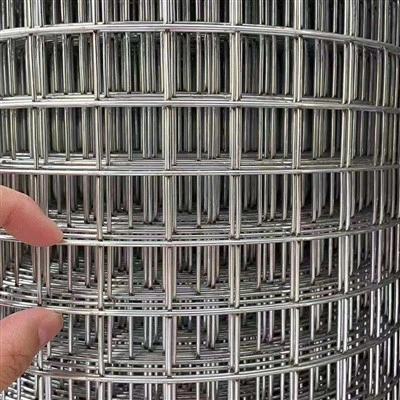
First, and most obvious, is material durability mismatch. Not all grill mesh is made the same, and cutting corners on material is the number one reason we see returns. Back in 2021, a local food truck owner came to us with a broken mesh that had lasted only 3 months. Turns out, he’d bought a budget mesh from a non-specialized hardware store—one made from thin, low-grade steel with a basic zinc coating, not the food-grade, heat-resistant coating we use for our commercial lines. That thin steel can’t handle the constant temperature swings of grilling. When you heat a cold grill up to 500°F, then douse it with cold water to clean it immediately after, the metal expands and contracts rapidly, and a flimsy coating is no match for that stress. Even for backyard users, if your mesh is made from 201-series stainless steel (cheaper, prone to rust) instead of 304-series (food-grade, corrosion-resistant), it’ll develop tiny micro-cracks over time. Those cracks start small, but once heat and grease seep into them, they widen into full breaks. We tested this ourselves last year: we ran 10 identical test grills, half with our 304-grade mesh and half with generic steel mesh. The generic mesh had micro-cracks after 20 uses, while ours showed no signs of wear after 60 uses. That’s the difference between a material built for grilling and one built to be cheap.
Next, it’s all about how you load and use the mesh. A lot of people don’t realize that grill mesh isn’t a solid surface—it’s a grid of thin wires, and every action you take puts uneven pressure on those wires. The most common culprit here is overloading the mesh. I had a regular customer last summer, a guy who catered weekly summer block parties, kept breaking his mesh every 4 weeks. When we looked at his setup, he was stacking 20 pounds of burgers, hot dogs, and veggies on a mesh designed for 15 pounds max. Even if the mesh looks sturdy, putting too much weight on one spot (like the center, where most people pile food) bends the wires beyond their breaking point. Another common misuse: using metal utensils that scratch or gouge the mesh. We’ve seen customers use metal spatulas, tongs with sharp edges, even grill forks that catch on the grid and pull wires loose over time. I always tell people, use silicone or wooden tools, but even metal utensils are okay if you’re not digging aggressively into the mesh. Then there’s direct exposure to open flame. If you leave a gas grill’s burner on high without food on the mesh, or pile charcoal too close to the mesh’s underside, the wires can get so hot they soften. Stainless steel has a melting point around 2500°F, but when it’s held at 1800°F for 10+ minutes straight, it loses tensile strength. That’s when you’ll see wires warp or snap right where they’re overheated.
Grease buildup and improper cleaning is another big one, and it’s a mistake that’s 100% preventable. Grease is sticky, and over time, it cakes onto the mesh, filling in the gaps between wires and adding extra weight. Worse, when that grease heats up, it breaks down into carbon deposits and corrosive byproducts. A 2022 study from the National Barbecue Association found that un cleaned grill mesh has 3x higher surface corrosion than mesh cleaned after every use. That corrosion eats away at the wires from the outside, creating tiny pits that turn into cracks. I saw this first-hand with a customer who’d had the same mesh for 2 years, never cleaned it after summer cookouts. When he brought it to us, the mesh was so caked with grease that the grid was barely visible—light pressure from his tongs caused 3 wires to snap right off. The worst part? People often think a quick scrape with a grill brush is enough, but if you don’t get into every nook and cranny, grease builds up over months. We recommend using a wire brush designed for grill mesh, then a soak in warm soapy water every 5 uses, to keep that buildup from becoming a problem.
Environmental factors and storage also play a role, especially for people who store their grills outside year-round. Even if your mesh is made of stainless steel, constant exposure to moisture, rain, snow, and even humidity can cause rust. Wait, I know—stainless steel is supposed to be rust-resistant, but only if it’s food-grade and kept dry. Cheap 201-series stainless, for example, starts to show rust spots after a few months of exposure to salt air (if you live near the coast) or heavy winter snow. Those rust spots weaken the wires, and next time you grill, they’ll snap. I had a customer in Florida last winter who kept his grill on his lanai, uncovered. By March, his mesh had small rust holes, and when he used it for a big cookout, the mesh split in half when he put a whole turkey on it. Storage matters too—if you fold or roll your mesh when it’s wet, the wires can kink, and those kinks are stress points that will break the next time you apply heat or pressure. We always tell customers to lay their mesh flat to dry after cleaning, then store it in a dry garage or shed, not crammed under a pile of grilling tools.
Wait, there’s one more less common mistake that’s worth mentioning: incorrect mesh size or fit for your grill. A lot of people buy a universal grill mesh and just cut it to fit, which can stretch or narrow the wires unevenly. Last year, a customer came to us with a mesh that had broken along the edges, and when we checked, he’d cut the mesh with a pair of metal shears that were too dull, so the edges were frayed and the wires were bent out of shape. When the mesh heated up in the grill, those frayed edges became weak points. We’ve also seen people use mesh that’s too small for their grill, so they have to stretch it to fit, putting constant tension on the wires around the perimeter. That tension builds up with every use, and eventually, the wires snap. The fix? Measure your grill’s grates exactly, and buy mesh made specifically for that size—no cutting needed, which keeps the wires intact.

At the end of the day, most broken grill mesh isn’t a sign of bad grill design or cheap parts—it’s a mix of small, avoidable mistakes. From choosing the right material that can handle heat and pressure, to not overloading the mesh, to cleaning it regularly and storing it properly, these small steps add up to a grill mesh that lasts for years, not months. If you’re tired of replacing your mesh every few cookouts, or you’re a restaurant or food truck owner looking for a reliable supplier of high-quality, long-lasting grill mesh, we’re here to help. We work with backyard grills, caterers, and food service businesses to provide mesh that’s built to handle heavy use, with our 304-series stainless steel and heat-resistant coating that stands up to everything from weekend burgers to large-scale events. Reach out to our team to discuss your needs, get customized sizing, or learn more about how to keep your grill mesh in top shape for all your upcoming cookouts.
Wire Mesh Fence References
National Barbecue Association. (2022). Grill Material Durability and Maintenance Guidelines. Annual Industry Safety & Equipment Report.
American Society for Metals. (2020). Tensile Strength of Stainless Steel Under Cyclic Heat Stress. Materials Engineering Journal, Vol. 92, No. 4.
Food and Drug Administration. (2021). Food-Grade Metals for Contact with Hot Cooking Surfaces. Food Safety Compliance Bulletin.
Anping County Nuocheng Wire Mesh Co., Ltd.
As one of the most professional barbecue grill mesh manufacturers and suppliers in China, we also support customized service. Please feel free to buy high quality barbecue grill mesh for sale here from our factory. For price consultation, contact us.
Address: 100 meters southeast of Beimanzi Village, Dahezhuang Township, Anping County, Hengshui City, Hebei Province, China
E-mail: lixuhao0888@gmail.com
WebSite: https://www.ncwiremesh.com/
