If you’ve ever stood on the floor of a steel mill during a heat, the hum of machinery, the glow of molten steel, and the sharp tang of hot gases are impossible to miss. But what most casual observers don’t see is the quiet, precise work happening in the Ladle Refining Furnace (LRF) – and specifically, the inclusion modification step that’s one of its most critical, most underappreciated functions. As an LRF supplier with over two decades of working alongside steelmakers across North America and Europe, I’ve seen firsthand how skipping or cutting corners on inclusion modification doesn’t just lead to small defects; it can derail entire production runs, erode profit margins, and even damage a mill’s reputation for delivering consistent, high-quality steel. Today, I want to break down what inclusion modification actually is, why it matters more than you think, and how we approach it here at our company to help steelmakers hit their toughest targets. Ladle Refining Furnace
First, let’s ground this in the basics to make sure we’re all on the same page. When molten steel is first tapped from a blast furnace or electric arc furnace, it’s far from pure. It’s loaded with impurities like oxygen, sulfur, nitrogen, and unwanted non-metallic inclusions – tiny particles of alumina (Al2O3), calcium aluminate, or manganese sulfide (MnS) that form during early melting and tapping. These inclusions are like uninvited guests at a party: some are hard, sharp, and brittle, while others are soft and ductile. Either way, they don’t belong in finished steel. If they’re left in place, they cause all sorts of problems: they can act as stress concentrators, leading to cracks in automotive sheet steel, pipeline steel that fails under pressure, or wind turbine components that break mid-load. For steel that goes into aerospace parts or medical devices, even a single micrometer-sized inclusion can be a safety hazard.
Inclusion modification is the process of treating these inclusions in the LRF to change their shape, size, and composition so they become harmless, or at least far less damaging, to the final product. A lot of people confuse this with inclusion removal – but they’re not the same. Removal is about pulling inclusions out of the molten steel, usually through flotation or slag reactions. Modification is about working with the inclusions that remain, reshaping them so they don’t cause defects. In my 22 years on the ground with steel teams, I’ve learned that you can never get 100% removal; there’s always a small fraction of inclusions left. The trick is making sure those don’t ruin your steel.
Let’s take a common example: MnS inclusions. When steel is just tapped, MnS forms as long, stringy, jagged particles. If you roll that steel into sheets for car doors, those stringers stretch out during rolling, creating surface defects that have to be trimmed off, wasting material and time. But if you modify those MnS inclusions with a small dose of calcium, they turn into tiny, spherical, uniformly dispersed particles that don’t stretch during rolling. No more trim waste, no more surface flaws. Another critical target is alumina inclusions, which are hard, angular, and prone to clogging the porous plugs at the bottom of the ladle – a problem called nozzle clogging. Clogged nozzles mean you have to stop casting early, or even tear out a partially finished strand, costing tens of thousands of dollars in lost production. Modifying alumina with calcium turns those sharp Al2O3 particles into low-melting calcium aluminate (like 12CaO·7Al2O3, which is liquid at steel’s processing temperature), so they don’t build up on the nozzle and block flow. That’s a huge, often overlooked win for operational efficiency.
Now, why does this step happen exclusively in the LRF? You could argue you could add modifiers during EAF tapping, but that’s a bad idea. The EAF is a chaotic, high-turbulence environment; adding calcium there would mean most of it burns off before it can react with inclusions, or it creates unwanted reactions with slag. The LRF is a controlled, calm environment: it holds the molten steel at a precise temperature (usually between 1520°C and 1580°C, depending on the steel grade), has a protective slag layer that limits reoxidation, and allows for gentle mixing through argon stirring – the perfect conditions to get the modifier to react with inclusions evenly, without waste or excess reactions. That’s why the LRF is often called the “quality center” of steel production, and inclusion modification is its core function.
I’ve seen mill teams try to skip or skimp on inclusion modification for cost reasons. “We’ll just run hotter and get better removal,” they say. Or, “We can use a cheaper modifier.” Let me tell you: that’s a false economy. Last year, we worked with a mid-sized carbon steel producer in the Midwest that cut its calcium addition from 0.2 kg per ton of steel to 0.08 kg to save $1,200 per heat. Within three months, they had 12 coils rejected for surface defects, costing over $200,000 in scrap and rework, plus 18 hours of downtime while they unclogged nozzles. That’s $200,000 down the drain for $1,200 in short-term savings. The right amount of modification isn’t about throwing more materials at the problem – it’s about precise, controlled addition based on your specific steel grade, the chemistry of your incoming inclusions, and your downstream processing. Different steel grades need different modifiers: high-strength low-alloy (HSLA) steel needs a combination of calcium and rare earth elements to modify both alumina and sulfur; stainless steel needs magnesium to avoid chromium carbides forming; specialty steel for bearing applications needs very fine, spherical inclusions to prevent fatigue failure. One size does not fit all, which is why the LRF’s ability to deliver that tailored treatment is so important.
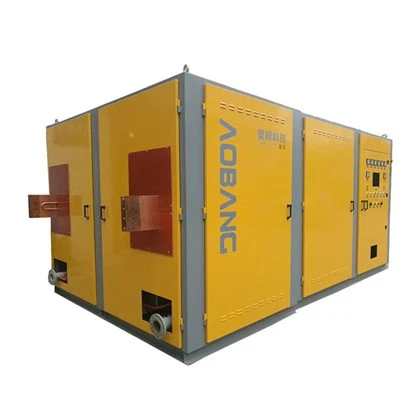
At our company, we design and build LRFs with inclusion modification as a non-negotiable core feature, not an afterthought. We don’t just supply the furnace itself; we work with each client to audit their current process, identify their biggest inclusion-related pain points, and design the modification system that fits their needs. For example, we’ve integrated modular addition lances that add modifiers directly into the core of the ladle, not just on the surface, so they’re evenly dispersed and don’t burn off before reacting. We also include precision temperature control in our LRFs, because if the steel is too hot, modifier reactions are too fast and uneven; too cold, and inclusions can re-solidify into harmful shapes. Our argon stirring systems are calibrated to create gentle, laminar flow – not the rough, turbulent mixing that would stir in air and cause reoxidation, or too little stirring that leaves pockets of unmodified inclusions.
Another key point about inclusion modification is that it’s not a set-it-and-forget-it step. Inclusions change as you move through the LRF and the caster. That’s why we include real-time monitoring tools in our LRFs: sensors that measure steel chemistry, inclusion size, and viscosity, so operators can adjust modifier additions on the fly. If a heat’s sulfur level is higher than expected, the system alerts the operator to add a bit more calcium. If nozzle pressure starts to rise, that’s a sign of incipient clogging, and they can add a small dose of calcium to clear it before it becomes a problem. That level of control is only possible because the LRF is a closed, controllable environment – you can’t get that kind of precision in the EAF or during tundish processing.
Let’s talk about the long-term impact, too. Steel producers that prioritize inclusion modification don’t just make better steel – they build better relationships with their customers. The automotive sector, for example, requires steel with zero surface defects to produce electric vehicle (EV) bodies that are lightweight, strong, and aesthetically consistent. Pipeline companies demand steel that can withstand high pressure and years of corrosion, with no inclusions that could lead to ruptures. Wind turbine manufacturers need steel shafts that don’t fail under repeated bending loads, a failure almost always caused by fatigue from unmodified inclusions. By delivering a cleaner, more uniform product through proper inclusion modification, steel mills can command higher prices, secure longer-term contracts, and reduce warranty claims. A friend of mine who runs a large steel service center told me that their top supplier, one that uses our LRFs and modified their inclusions consistently, gets a 10% price premium on all their coils because their customers never reject a coil for inclusion-related defects.
I want to be clear: inclusion modification isn’t the only function of the LRF. It also adjusts steel chemistry, maintains temperature for continuous casting, and removes some remaining inclusions through slag reactions. But when you look at the most common, most costly defects steel producers face, inclusion modification is the linchpin. It’s the step that turns a good heat of molten steel into a great heat – the kind that becomes a coil, a pipe, a turbine blade, or a part that keeps people safe every day.

If you’re a steel producer struggling with inclusion-related defects, nozzle clogs, or inconsistent steel quality, we’re here to help. Our team has decades of experience designing LRFs tailored to a wide range of steel grades and production needs, with specialized inclusion modification systems built to deliver consistent, reliable results. We work with you every step of the way, from process auditing to post-installation training, to make sure your LRF is maximizing the value of the inclusion modification step. Reach out to our team to discuss your specific challenges and how we can help you improve your product quality, reduce downtime, and boost your bottom line.
Induction Melting Furnace References
- Guthrie, R.I.L., "The Metallurgy of Ladle Refining," Iron and Steel Society, 2001.
- Taylor, S.P., "Non-Metallic Inclusions in Steel: Formation, Effects, and Control," CRC Press, 2014.
- Sekhar, J.A., "Ladle Furnace Technology: Principles and Practice," Steel Research International, 2008.
- The Iron and Steel Institute, "Inclusion Modification in Ladle Refining Furnaces: Best Practices for High-Quality Steel Production," 2020.
- Wang, H., et al., "Effect of Calcium Modification on Alumina Inclusions and Nozzle Clogging in Continuous Casting," ISIJ International, vol. 52, no. 10, 2012, pp. 1824-1830.
Xi’an Aobang Technology Co., Ltd.
As one of the most professional ladle refining furnace manufacturers and suppliers in China, we’re featured by quality products and good price. Welcome to buy durable ladle refining furnace for sale here and get quotation from our factory. Customized orders are welcome.
Address: No.268, Caotan 6th Road, Economical and Technological Development Zone, Xi’an, Shaanxi, China.
E-mail: alicezhang@xaabfurnace.com
WebSite: https://www.xaabfurnace.com/
