If you’ve ever spent time moving heavy, bulky loads through tight spaces like loading docks, warehouse aisles, or even the back of a delivery van, you know the frustration of struggling with a standard hand truck. The tall, vertical frame of a traditional hand truck requires you to tilt large loads backward to balance them on the wheels, but that doesn’t work when your space is so low that you can’t tilt—think about sliding a heavy fridge under a truck bed, or moving a giant pallet through a gap under a mezzanine, or even hauling equipment under a low supermarket shelf. That’s exactly why so many of our regular clients come to us asking: “Are there hand trucks with a low-profile design?” The short answer is yes, and over the past 12 years as a hand truck supplier, I’ve watched this niche product line grow into something that solves specific, really annoying pain points that standard models were never built to handle. Let’s break down what low-profile hand trucks are, how they work, where they shine, and why they’re not just a fancy add-on—they’re a game-changer for anyone moving heavy, low-clearance loads. Hand Trucks

First, let’s start with the basics: what makes a hand truck “low-profile,” and how is that different from a standard model? Most traditional aluminum or steel hand trucks have a height of 48 to 60 inches from the ground to the top of the handle, and the footplate (that flat, angled metal part that sits under the load) sits 6 to 8 inches off the ground. That extra height might seem small, but when you’re trying to slide a 200-pound industrial battery under a delivery truck that has 5.5 inches of clearance between the frame and the ground, those extra couple of inches turn a doable move into a major headache. Low-profile hand trucks solve this by lowering that critical footplate height, trimming overall frame height, and sometimes adjusting the wheel placement to create a far lower center of gravity—all without sacrificing load capacity or durability, which is non-negotiable for a product that’s supposed to move heavy stuff.
I remember the first time a client asked me about a low-profile hand truck back in 2011. He was a delivery driver for a medical equipment company, and he’d just tried to move a 150-pound portable X-ray machine to a client’s hospital room. The elevator lobby had a narrow gap under the elevator car that the standard hand truck footplate was too tall to fit through, and when he tried to lift the machine onto his shoulder to carry it, he pulled a muscle in his back. He was furious, and he told me, “Every hand truck I’ve used is built for wide, open spaces. No one makes something that fits where I actually need to work.” That conversation stuck with me, so I started researching existing low-profile models, talking to other suppliers, and even modifying standard hand trucks in my own warehouse to see if I could create a better version. What I learned quickly is that low-profile hand trucks aren’t a one-size-fits-all product—they come in several different designs, each built for a specific use case, which is something I try to explain to every client who comes to me curious about them.
Let’s start with the most common type: the low-profile straight hand truck. Unlike standard hand trucks that have a curved or angled footplate designed to cradle tilted loads, straight low-profile hand trucks have a flat, rigid footplate that sits as low as 3 inches off the ground. The frame is shorter overall too—usually topped out at 36 to 42 inches from the ground to the handle—so you don’t have to reach up as far to grab it. These are perfect for moving flat, rigid loads: pallets, large boxes, equipment, even stacked lumber. A construction company client of ours uses these every day to move concrete blocks and tool chests through the narrow gaps between building frames on job sites, where the ceiling is only 7 feet high and standard hand trucks can’t fit without scraping the top of the frame. The load capacity on these isn’t trivial, either—most can handle between 500 and 1,000 pounds, depending on the material. We use heavy-gauge steel for our straight low-profile models, and we test each one to make sure it can hold that weight at the low footplate height, because if the frame flexes, it’s dangerous for the operator and the load.
Then there’s the low-profile convertible hand truck, which is basically a two-in-one product that switches between straight hand truck mode and the traditional tilted, shoulder-cradle mode that most people associate with hand trucks. This is a really popular design for small businesses, like local movers or furniture delivery companies, who need to maneuver through tight spaces but also sometimes have to carry loads up stairs or over curbs. The key here is that the convertible low-profile model has a foldable footplate, so you can flip it from the low flat position for tight gaps to the angled position for balancing heavier loads as you tilt them. I had a furniture delivery client last year who switched from standard hand trucks to our low-profile convertibles, and he told me that since he made the switch, he’s cut his time on small, tight deliveries by 30%—no more struggling to slide a couch footstool under a porch overhang, no more scraping the top of his hand truck on a low basement door. That’s the kind of real-world impact that makes this product worth investing in, not just a gimmick.
Another design you’ll find, especially in industrial and warehouse settings, is the low-profile pallet hand truck (sometimes called a pallet jack, though it’s a little different from the electric pallet jacks most people know). These are built specifically to fit under standard wooden or plastic pallets, with a footplate that slides directly into the pallet’s base openings and a lower wheel placement that keeps the entire unit just 3 to 4 inches off the ground. Traditional pallet hand trucks have a footplate that sits 6 inches or higher, which means they can’t fit under low-profile pallets, or pallets that are designed to slide under low shelves. A warehouse client of ours that stores parts for the automotive industry was dealing with a big problem a few years ago: their new shelving units had a clearance of only 4.5 inches between the shelf and the floor, and their standard pallet hand trucks couldn’t reach under. They were having to manually lift each pallet 2 inches off the ground to slide the standard hand truck under, which was slow and caused a lot of back injuries for their staff. Once we switched them over to our low-profile pallet hand trucks, that problem was gone. Their staff can slide the hand truck right under the pallet without lifting, and they’ve seen a 25% increase in their picking speed for low-shelf inventory. That’s the kind of specific, practical solution that low-profile hand trucks were made for.
Now, a lot of people ask me: why not just use a dolly or a forklift for these tight spaces? I get that question all the time, and it’s a fair one. Forklifts are great for heavy loads and large warehouses, but they’re too big for tight spaces—think a narrow grocery store aisle, a small apartment hallway, or the back of a delivery van where you only have 2 feet of space to work. Dollies, on the other hand, usually have a lower weight capacity than hand trucks, and they’re not designed to handle irregularly shaped loads like fridges, washing machines, or stacked boxes. A standard dolly might work for a small box, but if you’re moving a 500-pound load, a hand truck gives you the leverage to lift and maneuver it safely, which a dolly doesn’t. Low-profile hand trucks give you that same leverage, but in a package that fits where no other material handling tool can.
That said, there are a few things to keep in mind if you’re thinking about investing in a low-profile hand truck, because they’re not right for every job. First, load capacity: while most low-profile models are very durable, some of the ultra-low-profile models (those with footplates below 3.5 inches) have a slightly lower weight limit than standard hand trucks. That’s a trade-off you have to make for the lower height—you can’t have a 1,500-pound capacity hand truck sitting 2 inches off the ground, because the frame would have to be thinner to get that low, and it wouldn’t support the weight safely. So if you’re moving extremely heavy loads, you’ll want to stick with a standard heavy-duty hand truck, but for most loads that are between 200 and 800 pounds, a low-profile model works perfectly.
Another thing to consider is maneuverability: because the footplate is lower and the frame is shorter, some low-profile hand trucks have a slightly smaller turning radius than standard models. That’s not a problem in most spaces, but if you’re working in an extremely tight corner, you might have to maneuver a little slower than you would with a standard model. I always tell clients to measure their specific clearance space before buying—measure the gap you need to fit through, the height of the load you’re moving, and the space you have to turn, and then match that to the low-profile hand truck’s specifications. We keep a guide on our website (I don’t sell directly through links, so I just send it to clients who ask) that walks through how to measure for a low-profile hand truck, and it’s saved a lot of clients from buying the wrong product.
Over the years, I’ve seen low-profile hand trucks evolve a lot. The models I was modifying in my garage back in 2011 were flimsy, had cheap wheels, and only came in one or two styles. Now, we have low-profile hand trucks with puncture-resistant rubber wheels that work on concrete, asphalt, and even carpet, we have lightweight aluminum models that are easy for one person to lift, and we have heavy-duty steel models that can handle harsh construction site conditions. We even make custom low-profile hand trucks for specific clients—like a movie studio that needed a hand truck to move 70-pound camera cases through the narrow gaps between theater seats, so we made a model with a narrower footplate and extra padding on the frame to protect the cases. That’s the kind of flexibility that makes this product line so valuable.
I’ve also noticed that more and more industries are adopting low-profile hand trucks as a standard piece of equipment, not just a niche solution. E-commerce delivery companies, for example, are using them to move large boxes through apartment building hallways and the narrow gaps behind delivery truck seats. Medical equipment providers use them to move patient beds and exam tables through hospital elevators and hallway doors that were never designed for large equipment. Warehouses that use low-shelf storage for small parts or inventory are switching to low-profile pallet hand trucks to cut down on manual lifting and increase speed. Even moving companies are adding them to their fleets, because they make moving through narrow doorways and under porches so much easier than standard hand trucks.
At the end of the day, the answer to “Are there hand trucks with a low-profile design?” isn’t just yes—it’s that they’re a critical tool for anyone who works in a space where clearance is tight. They’re not a replacement for standard hand trucks, forklifts, or dollies, but they fill a gap that no other material handling tool can. For me, as someone who’s spent my whole career helping people move heavy stuff safely and efficiently, there’s nothing more satisfying than hearing a client tell me that our low-profile hand truck solved a problem they’d been dealing with for years. The delivery driver I met back in 2011? He came back to me a couple of years later and told me that our low-profile hand truck helped him cut his work-related injuries by 40%, because he didn’t have to lift heavy loads onto his shoulder to get them through tight spaces. That’s the kind of impact that makes this work worth doing.
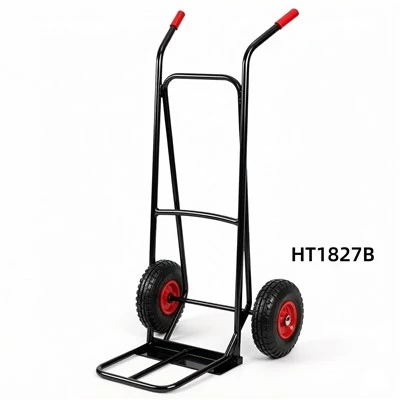
If you’re dealing with tight clearance spaces, struggling to move low-profile loads, or just tired of standard hand trucks not fitting where you need them to, I’m happy to walk you through our low-profile hand truck options, answer any questions you have about load capacity, dimensions, or use cases, and help you find the right model for your needs. Whether you’re a small business owner, a warehouse manager, a moving company operator, or just someone who needs a hand truck for occasional use, we’ve got models that work for every budget and every application. Don’t let tight spaces or low clearances slow you down—low-profile hand trucks are designed to solve exactly that problem, and they’ll make your work easier, safer, and more efficient.
Hand Trucks For further research and context on low-profile material handling equipment and design standards, consider the following sources:
- National Association of Material Handling Distributors. (2022). Low-Profile Hand Truck Design and Application Guidelines. Material Handling Industry Association.
- Occupational Safety and Health Administration (OSHA). (2021). Ergonomic Solutions for Manual Material Handling in Tight Work Spaces. U.S. Department of Labor.
- Industrial Truck Association. (2020). Pallet Jack Specifications for Low-Clearance Warehouse Environments. Industrial Truck Standards Development Foundation.
Qingdao Herzhe Tools Manufacturing Co., Ltd.
Qingdao Herzhe Tools Manufacturing Co., Ltd. is one of the most professional hand trucks manufacturers and suppliers in China. We have world-leading production equipment and strong manufacturing capabilities. Please feel free to buy advanced hand trucks at competitive price from our factory.
Address: No. 406 Shuangfushan Road, Baoshan Town, Qingdao CHINA
E-mail: herzhetool@163.com
WebSite: https://www.herzhetoolsmfg.com/
