Hey guys, it’s Jake from the structural nuts team — and let’s cut to the chase: when you’re building stuff that matters, the last thing you want is a nut that cracks, snaps, or comes loose mid-install. I’ve been in this game for 8 years, talking to steel erectors, bridge builders, wind turbine techs, even big rig maintenance crews, and one question comes up more than any other: “How tough are these things, really?” People throw around “impact resistance” like it’s a buzzword, but most folks don’t actually get what makes a structural nut hold up when a sledgehammer slips, a crane hook bounces, or a whole structure shifts under pressure. Today, I’m breaking this down like we’re on a job site, no fancy engineering jargon (okay, maybe a tiny bit) and no corporate fluff. Let’s get into it. Structural Nuts

First, let’s make sure we’re on the same page about what a structural nut actually is — not the little cheap ones you grab from the hardware store for a wobbly shelf. These are the heavy-duty guys: hex nuts, lock nuts, sometimes even custom-shaped ones made for steel frameworks, bolted connections that don’t move once they’re set… until they have to. And when “impact” hits here, it’s not just a soft tap. Think: a 2000-pound steel beam that’s being lifted by a crane, bouncing a little before it locks into place. That sudden jolt transfers force straight to the bolt and nut holding it to the column. Or a crew member drops a 10-pound wrench right next to a fully torqued nut — the vibration and shock from that can be enough to split a low-quality nut. That’s the stuff we test for, and it’s way more important than just how much static weight a nut can hold.
So, what actually determines a structural nut’s impact resistance? A lot of people assume it’s just the material, but here’s the tea: it’s a combo of material, heat treatment, even how it’s made. Let’s start with material. Most structural nuts are either carbon steel, alloy steel, or sometimes stainless steel for corrosive environments. Carbon steel is the workhorse — it’s strong, cheap, and if it’s formulated right, tough. Alloy steel has extra elements like chromium, molybdenum, or vanadium that make it way less likely to shatter when hit hard. Wait, but stainless steel? Don’t sleep on it for impact, but it’s a bit trickier. 304 stainless is corrosion-resistant but softer, so it’s not the best for high-impact spots. 316 is tougher, but even then, if you don’t treat it right, it can be brittle when cold. That’s a big one — I’ve seen guys use 304 stainless on a cold-weather bridge project, and when the temperature dropped to 10°F, those nuts snapped like dry twigs under impact. Oops.
Next up: heat treatment. This is the secret sauce that most budget suppliers skip to cut costs. When we make our structural nuts, we heat them to a super specific temperature, then cool them slowly (or sometimes fast, depending on the grade) to balance hardness and toughness. If you heat a nut too hot, it gets grainy and brittle — like a potato chip, hard but it shatters if you look at it wrong. If you don’t heat it enough, it’s too soft, so it’ll deform or strip when hit. We do a full quenching and tempering process on all our Grade 8 and Grade 10 nuts, and that’s what lets them take hits that would break a cheaper Grade 5 nut. I remember a test we did last year: we took three identical bolts, each with a Grade 5 (budget) nut, a Grade 8 from us, and a competitor’s off-brand Grade 8 nut. We set ’em up in a test rig that mimics a crane drop impact, swung a 50-pound weight at the joint. The budget Grade 5 nut split in half. The off-brand Grade 8? It deformed so bad the bolt wouldn’t budge, but it didn’t break. Our Grade 8? It took the hit, stayed torqued, no visible damage. That’s the difference.
Wait, and let’s not forget how the nut is shaped. Hex nuts are standard, but some have thicker walls, or rounded corners, which distribute impact force better. A thin-walled nut might crack at the corners when a shock hits, but a thick, properly radiused nut spreads that force out so it doesn’t concentrate in one spot. We design all our structural nuts with what’s called “load distribution profiles” — not some fancy lab term, just rounded edges and consistent wall thickness so there’s no weak point where a hit can start. That’s why when a sledge slips and hits the side of our nut, it doesn’t snap; it just takes the hit like it’s supposed to.
Now, let’s talk real-world scenarios, because this isn’t just lab tests. Let’s take wind turbines — those big towers at the top of hills are subjected to constant vibration, wind gusts that yaw the nacelle, and even occasional lightning strikes that create tiny shockwaves through the structure. The nuts holding the turbine base to the foundation have to handle all that, plus impact from heavy maintenance equipment being moved around on-site. A few years back, a wind farm client of ours called us in because their original supplier’s nuts were failing left and right — they’d crack during turbine startup, even though they were “Grade 8” on paper. We tested their old nuts and found they were made from low-grade carbon steel, no heat treatment, so they couldn’t handle the cyclic impact of the turbine moving. We swapped out our treated Grade 10 nuts, and they haven’t had a failure in three years. That’s the impact resistance working for them, not against.
Another example: bridge construction. When you’re setting steel girders for a highway overpass, those girders are being maneuvered with heavy equipment, so the bolted joints get tons of sudden, uneven force. We had a bridge crew in Ohio tell me last year that they used our nuts on a 120-foot girder that shifted a little mid-lift — the impact from that shift was enough to make a competitor’s nut strip, but ours stayed tight, no issues. They even started specifying our nuts for all their high-impact joints after that.
But here’s the thing: impact resistance isn’t a one-size-fits-all. If you’re building a sign frame, you don’t need a super high-impact nut. But if you’re building a seismic retrofitting project, or a offshore platform, or a mining conveyor belt that’s constantly vibrating and shifting, you need nuts that are tested for low-temperature impact, cyclic impact, even impact from heavy loads shifting. That’s why we offer different grades, different treatments, and we’ll work with you to pick the right one for your project — no upselling, just what you need. A lot of suppliers will tell you “our Grade 8 is the best,” but that’s not true if it’s not treated for the specific impact your job faces.
Wait, let’s address a common myth: “if a nut is hard, it’s impact-resistant.” No way. Brittle hardness is bad. Think of a glass window vs. a rubber eraser. Both are hard, but glass shatters on impact, rubber bounces. Our structural nuts are designed to be a mix of hardness (so they don’t strip when torqued) and toughness (so they don’t break when hit). That’s the balance all top structural nuts hit, and a lot of budget suppliers skip it. They make their nuts extra hard to pass basic torque tests, but that makes them brittle, so they fail under impact. We do Charpy V-notch impact tests on every batch of our nuts — that’s the standard test where you hit a notched sample with a pendulum and measure how much energy it absorbs before breaking. Our Grade 8 nuts absorb over 20 joules of energy at room temperature, and over 15 joules at 0°C (32°F), which is way above the industry minimum for structural nuts. Most budget brands are at 8 or 10 joules max, which is barely enough for indoor use, not outdoor construction.
Another thing: thread quality. If the threads are rough, or not formed correctly, impact force will concentrate there, causing the nut to strip or break before the rest of the nut. We roll-form all our nut threads, not cut them. Roll-forming compacts the material around the threads, making them stronger and more resistant to impact. Cut threads have tiny stress points where they’re sliced, so when an impact hits, those points crack first. I’ve seen that first-hand: a competitor’s nut with cut threads, hit hard enough, the threads snapped off clean right where they were cut. Our roll-formed threads? They bent a little, but stayed intact, because the material is stronger around the threads.
Now, let’s be real: nothing is unbreakable. Our nuts won’t survive a direct hit from a sledgehammer swung as hard as you can, but then again, no structural nut should have to. The point is, in all the real-world scenarios you’ll face on a job site, our nuts will hold up where others fail. We’ve tested them in salt spray (for coastal projects), cold chambers (for Arctic jobs), vibration tables (for industrial use), and impact testers (for crane, girder, turbine loads). And every time, they pass because we don’t cut corners on materials or heat treatment.
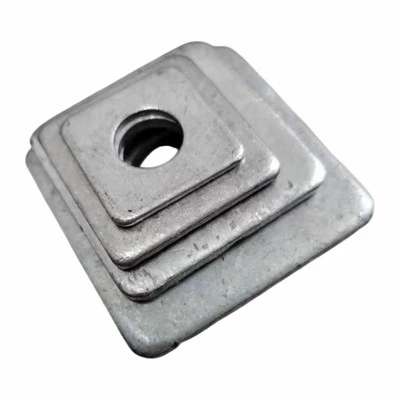
If you’re tired of nuts that break during installation, strip under impact, or fail when you need them most, let’s chat. We’ll send you samples for testing, help you figure out the right grade and treatment for your project, and make sure you have the structural nuts that actually do what they’re supposed to when the pressure’s on. No hidden fees, no confusing specs, just honest recommendations for your job.
Nuts References
- ASTM A194 / A194M-21, Standard Specification for Carbon Steel and Alloy Steel Nuts for Pressure Vessels and Valves
- Charpy V-Notch Impact Testing: Standard Test Method (ASTM E23-22)
- Structural Steel Fastener Performance: Impact and Fatigue Resistance in Construction (National Institute of Standards and Technology, 2020)
- Wind Turbine Bolted Joints: Impact Loads and Failure Mitigation (Journal of Constructional Steel Research, 2021)
Handan Jihao Fastener Co., Ltd.
We’re known as one of the most professional structural nuts manufacturers and suppliers in China. With abundant experience, we warmly welcome you to wholesale customized structural nuts made in China here from our factory. If you have any enquiry about cooperation, please feel free to email us.
Address: A2, Row 31, Feiyu Screw World, Hebei Pu, Linmengguan Town, Yongnian District, Handan City, Hebei Province
E-mail: wenzhaona0@gmail.com
WebSite: https://www.chinaboltnut.com/
